Meta
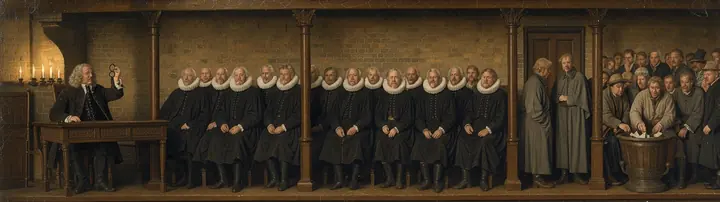
METAAt Meta, one man decides every shareholder vote. Mark Zuckerberg holds 99.8% of the ten-vote Class B shares, 60.8% of all voting power. He elects the board that oversees him, and he chairs it.
Public companies
A company is also a set of locks: who elects the board, who can sell the company, who can rewrite its rules. Each key hangs under whoever can turn it alone, read straight from the latest proxy statement the company filed with the SEC.
At Meta, one man decides every shareholder vote. Mark Zuckerberg holds 99.8% of the ten-vote Class B shares, 60.8% of all voting power. He elects the board that oversees him, and he chairs it.
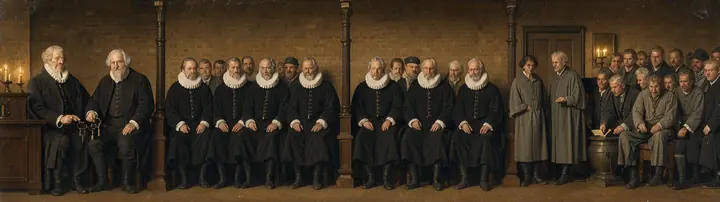
At Alphabet, the two founders hold the vote between them: Larry Page 27.4% and Sergey Brin 25.3%, over half together. Class C shares, nearly half of all the stock, carry no vote at all.

At Tesla, no one holds the keys alone. Elon Musk votes 19.8%, the largest block by far, but the real locks are in the rules: a staggered board, directors removable only for cause, and key bylaws that need two-thirds of all votes to change.

At Apple, the keys sit with the shareholders as a crowd. No one comes close to control: the largest holder, Vanguard, owns 9.63% but votes only a sliver of it, and the whole board and management own under 1%.
How to read a company painting
In a company the keys are decisions: electing and removing directors, approving a sale, amending the charter, hiring the CEO (gold), and lesser powers such as setting pay or calling a special meeting (iron). A shareholder-vote key hangs under whoever can carry that vote alone. If no one can, it hangs with the shareholders as a crowd.
The bar is the share of the vote each holder controls, exactly as the proxy statement prints it. Where a company has one vote per share and prints no separate voting column, the bar shows ownership instead and says so. "Everyone else" is the remainder.
Why compare
A rollup's key-holders can replace its contracts outright. A company's controllers act through votes, boards and courts: their power is legal and bounded by fiduciary duty, not mechanical. But the question is the same one: who can change the rules, and can anyone stop them?
Facts read from each company's latest definitive proxy statement on SEC EDGAR on 26 October 2026.